Madhya Pradesh Launches Hindi-Medium BTech in Civil Engineering With Rs 2 Lakh Incentive
Madhya Pradesh has started a Hindi-medium BTech programme in civil engineering at SGSITS, with 30 seats and a Rs 2 lakh final-year government incentive for eligible students.
Key Takeaways
- Strategic developments align with India's long-term infrastructure and technology trajectory.
- Institutional market observers point to sustained corporate expansion and regulatory certainty.
Madhya Pradesh has introduced a Hindi-medium BTech programme in civil engineering, giving students who studied in Hindi-medium schools an option to pursue engineering education in their preferred language.
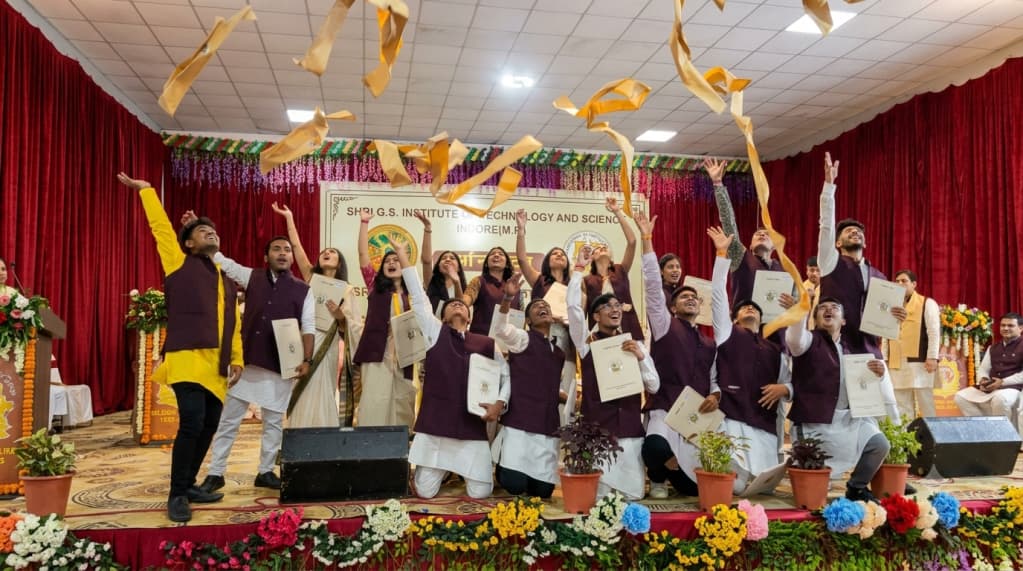
The programme has started from the current academic session at Shri G S Institute of Technology and Science (SGSITS), an aided autonomous engineering institute. The dedicated batch has 30 seats, of which around 20 have already been filled, officials said.
Students enrolled in the special batch will also be eligible for a Rs 2 lakh incentive from the state government when they reach their final year.
Hindi-medium engineering course aligned with NEP
The initiative has been introduced in line with the National Education Policy (NEP), which seeks to make higher and technical education more accessible to students who have studied in regional languages.
Officials at SGSITS said the programme addresses a challenge faced by students who complete their schooling in Hindi but find it difficult to understand technical subjects after moving to an English-medium engineering course.
Sunil Ajmera, head of the civil engineering department at SGSITS, said the institute had observed that some Hindi-medium students struggled to adapt to engineering education in English, with some eventually leaving their courses.
The new programme allows students to study and write examinations in Hindi while still being introduced to English technical terminology.
SGSITS prepared Hindi study material for four years
The institute began preparations for the programme several years before its launch.
Vivek Tiwari, an assistant professor in the civil engineering department, said faculty members had spent four years translating English technical study material into Hindi. The institute also conducted workshops to help teachers prepare for teaching technical subjects in Hindi.
The approach is designed to make difficult engineering concepts easier to understand without removing English from the curriculum entirely.
Students will continue to receive essential English-language training so they can meet the requirements of higher education and employment after graduation.
Students to receive English skills alongside Hindi instruction
The institute has stressed that the Hindi-medium BTech course is not intended to separate students from English.
Instead, the programme combines Hindi-based classroom learning with English-language skills and technical terminology. Faculty members believe this can help students understand core concepts more comfortably while preparing them for professional environments where English remains widely used.
Rohit Sharma, one of the students enrolled in the programme, said studying civil engineering in English would have required him to rely heavily on online tools to understand difficult subjects. Learning in Hindi, he said, allows teachers to explain technical concepts more clearly while still introducing the relevant English terminology.
The initiative represents an attempt to reduce the language barrier in engineering education while retaining the skills students may need for careers in the engineering sector.
Mumbai Weekly Staff
Editorial correspondent reporting on national and global stories for Mumbai Weekly.
More In India
View All India →
Prof. Dr. Arjun Chavan: A Scholarly Career Rooted in Hindi Literature and Research
After 38 years as a Professor and Head of the Hindi Department at Shivaji University, Kolhapur, Maharashtra, Prof. (Dr.) Arjun Chavan continues his literary work as an independent scholar and author. His career has covered Hindi literature, comparative literary studies, translation, research methodology, poetry, editing and academic research.