
Why Scotland, Wales and Northern Ireland Are Debating Their Future in the UK
The constitutional future of the United Kingdom is facing renewed debate as political leaders in Scotland, Wales and Northern Ireland push for greater autonomy or changes to their relationship with Westminster. Brexit, questions over devolution and renewed discussion of Irish reunification have added to the debate.
Key Takeaways
- Strategic developments align with India's long-term infrastructure and technology trajectory.
- Institutional market observers point to sustained corporate expansion and regulatory certainty.
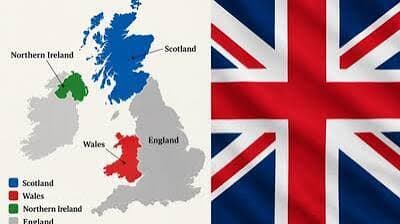
The constitutional future of the United Kingdom has returned to the political spotlight as leaders in Scotland, Wales and Northern Ireland press for greater autonomy and, in some cases, independence or reunification.
The issue gained fresh attention in September after the leaders of Scotland, Wales and Northern Ireland met in Cardiff to discuss constitutional change and cooperation. Their discussions came shortly after US President Donald Trump publicly said he would like to see a united Ireland, prompting a response from the UK government and unionist politicians.
The three nations do not have identical goals. Scotland has a long-running independence movement, Wales has a growing debate over greater self-government, while Northern Ireland's constitutional question centres on whether it should remain part of the UK or eventually become part of a united Ireland.
How the United Kingdom was formed
The modern UK emerged through a series of political unions rather than being created as a single state from the beginning.
England and Wales were brought under a common political system over centuries. Scotland remained a separate kingdom until the Acts of Union in 1707 created the Kingdom of Great Britain.
Ireland later became part of the United Kingdom of Great Britain and Ireland in 1801. Following the Irish War of Independence, most of Ireland left the UK in 1922, while Northern Ireland remained part of the United Kingdom.
The constitutional arrangement therefore developed through several stages and continues to shape political debates across the four nations.
Devolution changed the balance of power
The UK remains a single sovereign state, but Scotland, Wales and Northern Ireland have their own devolved institutions with powers over areas such as health, education and other domestic matters.
Scotland has its own Parliament and legal system, while Wales and Northern Ireland also have devolved legislatures and governments.
However, major areas including foreign affairs, defence and monetary policy remain matters for the UK government and Parliament at Westminster.
Supporters of greater autonomy argue that more decisions should be taken within the nations themselves. Unionist parties and politicians generally argue for maintaining the United Kingdom while continuing to work within the existing devolution framework.
Scotland has the most established independence debate
Scotland's independence movement is the most developed of the three.
In the 2014 Scottish independence referendum, voters rejected independence by 55.3% to 44.7%, with turnout of 84.6%, according to Electoral Commission data.
The question returned to the centre of Scottish politics after the 2016 Brexit referendum. Scotland voted clearly to remain in the European Union, with 1,661,191 votes for Remain compared with 1,018,322 for Leave.
The difference between Scotland's referendum result and the UK-wide outcome has been an important part of the independence argument. Across the UK, Leave won with 51.9% of the vote, while Scotland voted for Remain.
Independence supporters have argued that leaving the UK could allow Scotland to pursue its own economic and European policies, including potentially seeking closer ties with the European Union. Questions over public finances, taxation, currency, debt and trade remain central to the debate.
Wales is taking a different route
Wales has historically had a weaker independence movement than Scotland, but the question has gained greater political attention.
Plaid Cymru, the Welsh nationalist party, has pushed for greater Welsh self-government. In September 2026, Welsh First Minister Rhun ap Iorwerth joined Scottish First Minister John Swinney and Northern Ireland First Minister Michelle O'Neill at a meeting in Cardiff focused on the constitutional future of their nations.
The Welsh debate is not identical to Scotland's. Arguments range from stronger devolution and additional powers to full independence.
Wales also voted differently from Scotland in the 2016 Brexit referendum. Electoral Commission figures show that Wales voted 854,572 to 772,347 in favour of Leave.
That result illustrates why the constitutional debate cannot simply be explained through Brexit. Political attitudes in Wales have developed differently from those in Scotland and Northern Ireland.
Northern Ireland has a different constitutional question
Northern Ireland's situation is distinct because the main alternative to remaining in the UK is not an independent Northern Irish state.
Sinn Féin supports Irish reunification, meaning Northern Ireland would leave the United Kingdom and become part of a united Ireland.
The 1998 Good Friday Agreement established the principle of consent for any constitutional change. Under the agreement, Northern Ireland can become part of a united Ireland if a majority of people in Northern Ireland and the Republic of Ireland vote for that outcome in referendums.
Northern Ireland voted Remain in the 2016 Brexit referendum, with 440,707 votes for Remain compared with 349,442 for Leave.
Brexit subsequently brought renewed attention to the constitutional question because Northern Ireland remained part of the UK while the Republic of Ireland remained an EU member.
Trump brings Irish reunification back into the spotlight
The debate received additional international attention during Trump's September visit to Ireland.
Trump said he would "love" to see Ireland unified and described reunification as something he believed would eventually happen. His remarks were followed by criticism from unionist politicians and a reaffirmation from the UK government that there was no current basis for holding a referendum.
The comments did not change the legal process governing Northern Ireland's constitutional status. The Good Friday Agreement continues to place the principle of consent at the centre of any potential change.
Brexit remains an important part of the debate
The 2016 Brexit referendum is one of the major developments behind the renewed constitutional discussion.
The UK as a whole voted to leave the European Union, but Scotland and Northern Ireland voted to remain. Wales voted to leave alongside England.
For independence and nationalist movements, the results highlighted differences between the constituent nations and Westminster.
For supporters of the Union, the Brexit result demonstrated the importance of maintaining a common UK-wide political framework.
The debate therefore involves more than Britain's relationship with Europe. It also concerns who should make decisions on taxation, spending, immigration, trade, energy, foreign affairs and other areas of public policy.
What happens next?
The constitutional future of the UK will depend on political support within each nation as well as decisions by Westminster and, in Northern Ireland's case, the framework established by the Good Friday Agreement.
Scotland's independence question remains centred on whether another referendum should take place. Wales is debating the extent of powers it should have, while Northern Ireland continues to have a constitutional choice between remaining in the UK and potentially joining a united Ireland.
For now, none of these debates automatically means that the UK is heading for a breakup. They reflect different political movements and constitutional questions within a multinational state.
The future of the Union will ultimately be determined through democratic and constitutional processes in the nations that make up the United Kingdom.
Mumbai Weekly Staff
Editorial correspondent reporting on national and global stories for Mumbai Weekly.